Strategy
Nov 14, 2026
Mobile game user acquisition strategy: buy players who return
A practical acquisition plan for game studios that checks player quality before raising spend.
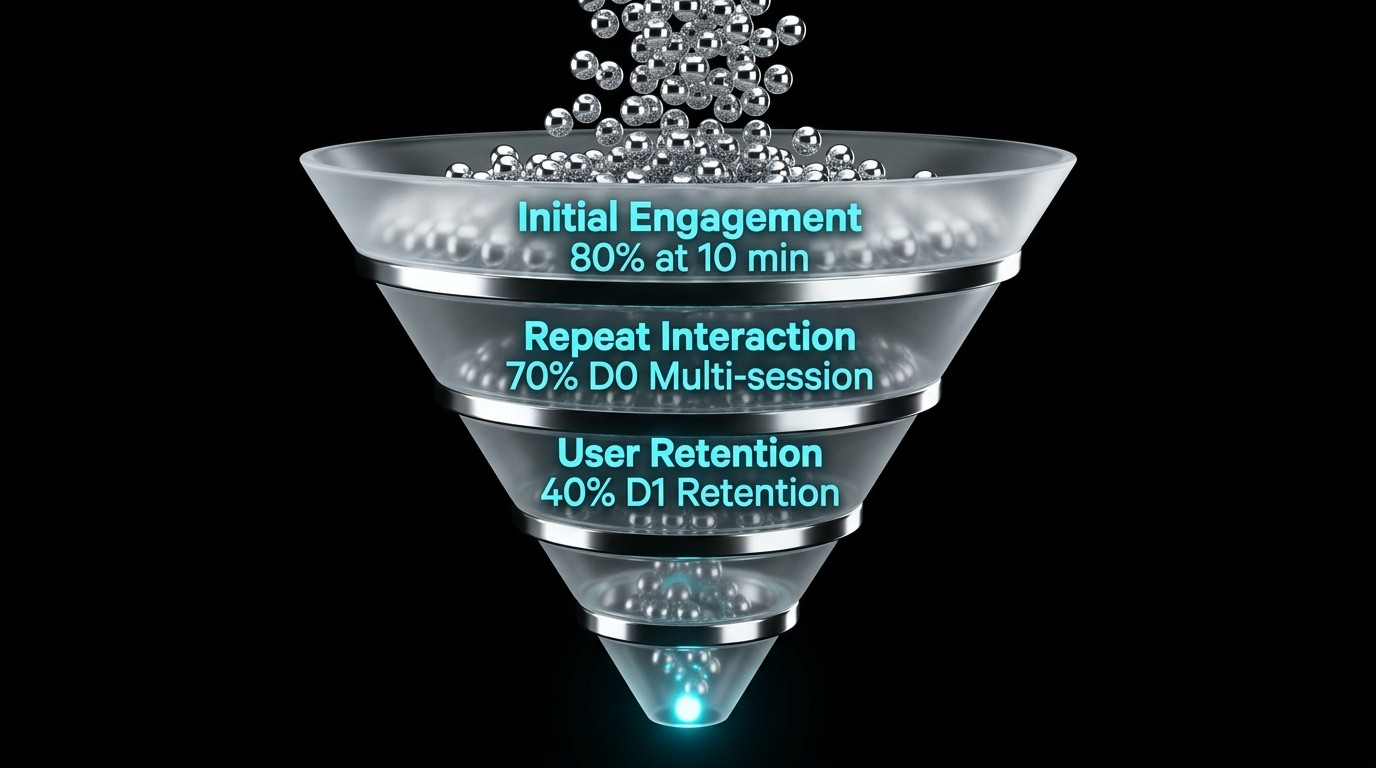
A mobile game user acquisition strategy should buy players who return, not just installs. Start with the first useful play session. Then set a spend limit that the game's real player value can support.
This guide is for a studio planning a new campaign or questioning a campaign that looks cheap on install cost. It gives you a sequence for choosing an audience, checking player quality, and deciding when to scale. It is a planning method, not a forecast for your game.
Start with the player your game keeps
Describe one player group using behavior, not a broad demographic label. Which game mode do they try first? What do they complete? Why do they open the game again? A strategy built around that behavior can give the creative team a specific promise to show.
Use your own install cohorts to find a group that reaches the first meaningful action and returns on Day 1 and Day 7. Keep game version, platform, country, and acquisition source in the view. A channel with a low cost per install may bring a different player mix from one with a higher cost. Compare them at the same cohort age.
If your game has little history, name the first meaningful action and instrument it before buying much traffic. A completed tutorial is useful only when it predicts play after the tutorial. A click or install alone is too early to stand in for player quality.
Put a ceiling on acquisition cost
Set the maximum cost per install from expected value after fees, refunds, and the payback time your studio can accept. Keep a base case and a downside case. Do not use lifetime value from older players as if new players will behave the same way.
For a simple example, assume a cohort earns $2.40 in net value per install within your chosen payback window. Spending $3.00 per install would not recover that cost inside the window. The numbers are illustrative, not a market benchmark. Change the inputs to match your game.
If you monetize with ads and purchases, check both sources together. Ad revenue can arrive from many players; purchase revenue may sit with a small group. Raising ad load can change return behavior, so an old revenue curve may not survive the new campaign. The mobile game monetization guide shows how to compare those models against retention.
Match the ad promise to the first session
Show a real mechanic, goal, or moment from the game. A creative that wins cheap clicks with an experience the game does not deliver can make installs look efficient while players leave early. Review the ad, store listing, and first session as one path.
For each creative idea, write the player promise in one sentence. Then check where the player sees that promise in the first session. If the ad shows strategic choices but the opening minutes contain only passive tutorial screens, fix that gap before adding more audience segments.
Store pages can help you make this test clearer. Apple's product page guidance describes tests for icons, screenshots, and previews. Its custom product pages can show different game features to different audiences. Use these options to reflect actual play, not to make different claims about the same build.
Run one small comparison
Test a narrow audience and a small creative set before moving to more countries or networks. Keep the game build and measurement rules stable during the first read. If you change onboarding, economy, and targeting together, you will not know which change moved the result.
Check | What to record | Why it matters |
|---|---|---|
Install cost | Spend divided by attributed installs | Shows the price of entry, not player value. |
First useful action | Share of installers who reach the game's first value | Shows whether the promise survives the opening session. |
Day 1 and Day 7 return | Share of the same install cohort that returns | Shows whether acquired players stay. |
Net value per install | Revenue after relevant costs, at a stated cohort age | Shows whether payback is plausible. |
Read each channel by install cohort, not by a blended site total. Check attribution settings and event definitions before comparing sources. A tracking change can look like a performance change. Keep a record of the exact campaign, creative, game build, and date range behind each result.
Decide before you raise spend
Write the stop rule before launch. For example: pause a creative if it misses the first useful action by a meaningful margin, even when install cost is low. Keep the margin tied to your game's normal variation and sample size. Do not borrow a universal cutoff.
Raise spend only when the same source shows a plausible payback path and steady return behavior in complete cohorts. If Day 7 is not mature, say so. Use early actions to decide whether to keep the test running, not to claim lifetime value is proven.
When results disagree, inspect the first session. A cheap channel with weak return may have a promise mismatch. A costly channel with strong return may still fail your payback limit. The next move follows the cause, not a single blended number.
If your studio needs to decide where to spend next, bring your campaign and cohort question to Interactive Catalyst. Share your game's first useful action, the source you are testing, and the payback window you need.